
Respiratory Biofeedback: Breathe Better with eSense
Master breathing training with real-time respiratory biofeedback. Learn diaphragmatic breathing exercises for stress reduction and deep relaxation.
Master breathing training with real-time respiratory biofeedback. Learn diaphragmatic breathing exercises for stress reduction and deep relaxation.
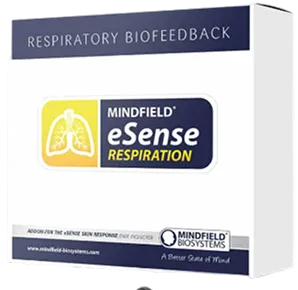
eSense Respiration is an add-on sensor that requires eSense Skin Response to function. It cannot be used as a standalone biofeedback device.
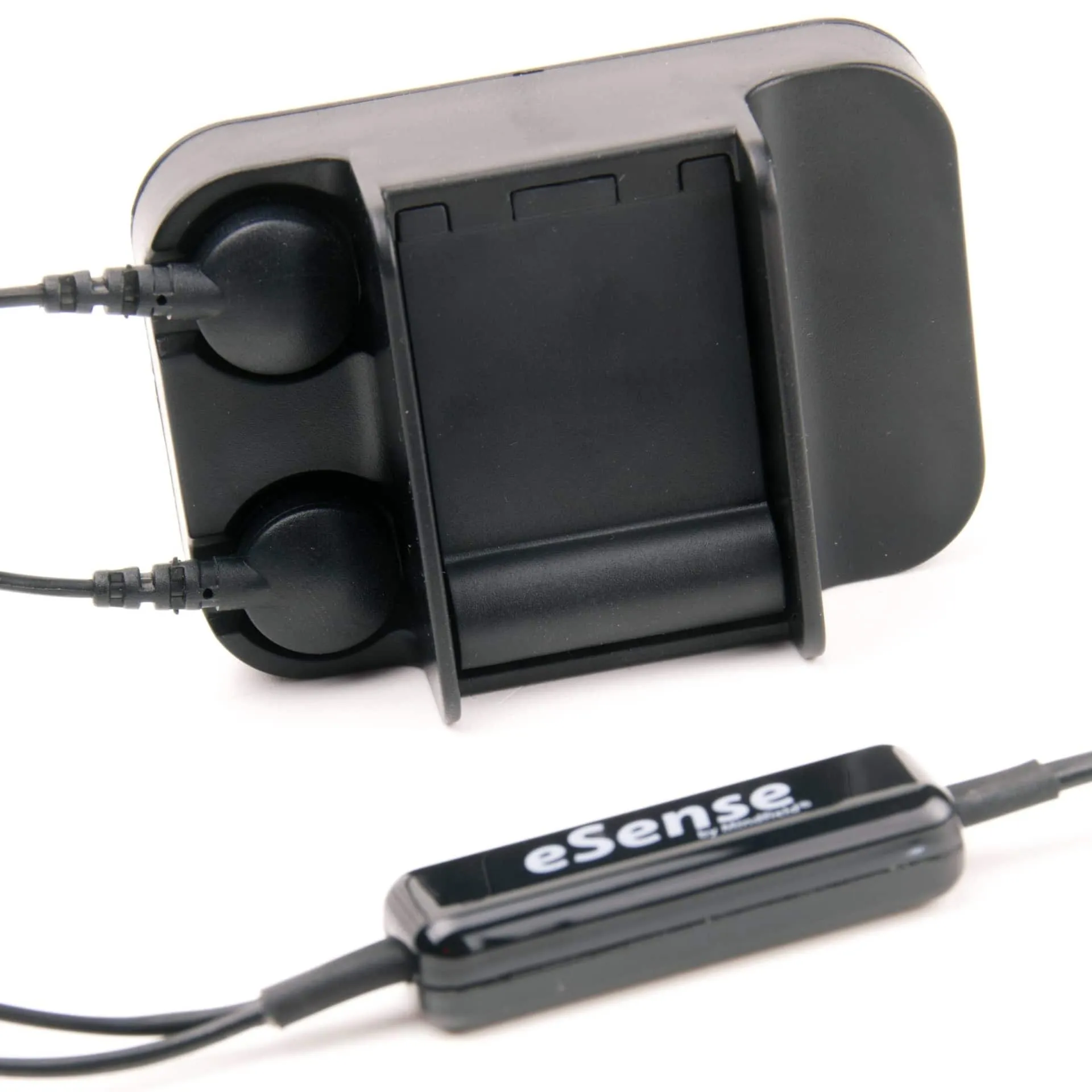
The eSense Respiration provides real-time respiratory biofeedback by measuring your breathing patterns. This breathing training add-on connects to your eSense Skin Response, combining breathing exercises with electrodermal activity feedback for comprehensive stress management.
Proper breathing is fundamental to stress management. Through respiratory biofeedback, you'll learn diaphragmatic breathing exercises, slow down your breathing rate, increase breath depth, and develop optimal breathing patterns that activate your parasympathetic nervous system.
Respiratory biofeedback with a precision pressure sensor to record your breathing patterns
Durable elastic belt comfortable to wear over clothing for breathing training
Train diaphragmatic breathing exercises and proper breathing techniques for stress reduction
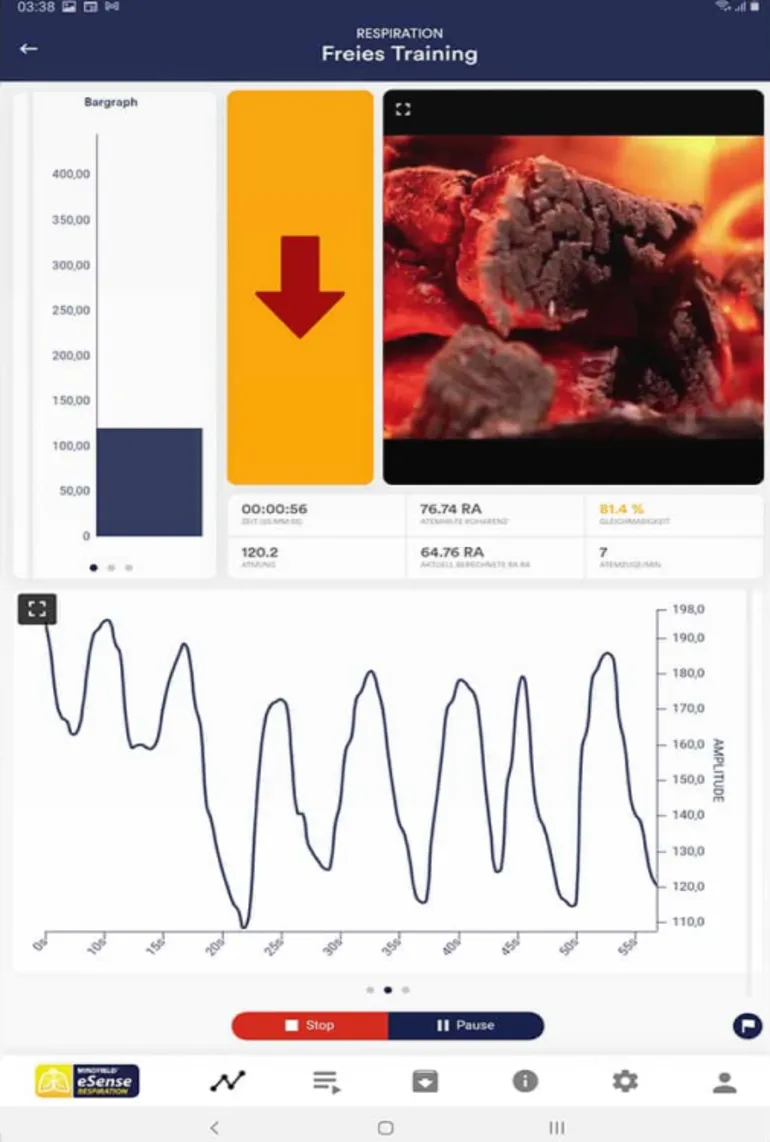
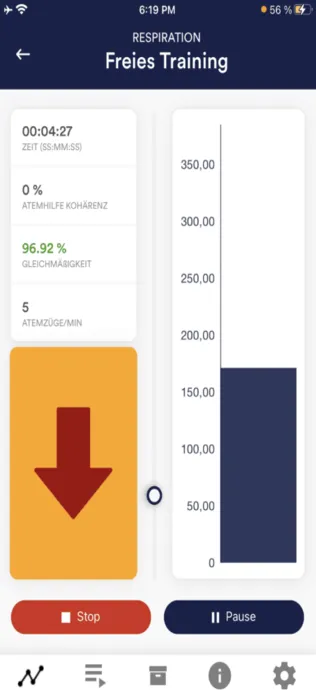
Real-time breathing training: monitor breathing rate, depth, and rhythm with respiratory biofeedback
Breathing aid feature guides you through optimal breathing exercises and patterns
Combines respiratory biofeedback with skin conductance data for comprehensive stress management
Free eSense App - export breathing training data as CSV file
Regular app updates with new respiratory biofeedback features
Designed and engineered in Germany
Rapid and
shallow breathing
Hyperventilation
If you
feel dizzy
To balance the
breathing cycle
Train for
abdominal breathing
The eSense Respiration with the eSense application offers you
Mindfield® eSense Respiration sensor incl. replacement spring
Expansion strap (elastic breathing belt)
Mindfield® eSense Skin Response sensor
2 Velcro finger electrodes (reusable)
Free eSense App for iOS & Android (optional in-app purchases available)
Detailed instructions for effective biofeedback training
Important: Add-On Product
eSense Respiration requires eSense Skin Response to function. It cannot be used as a standalone sensor.
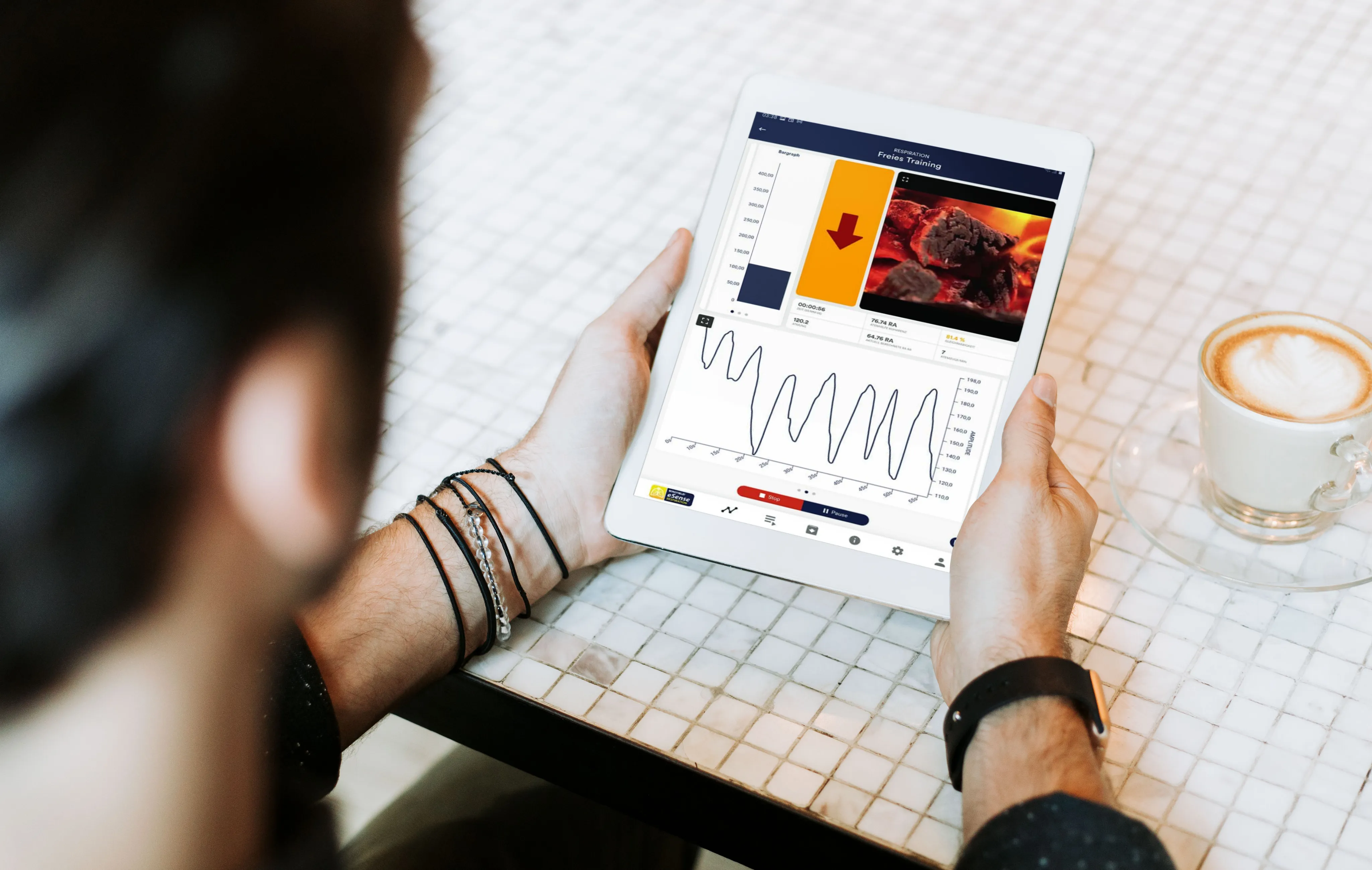
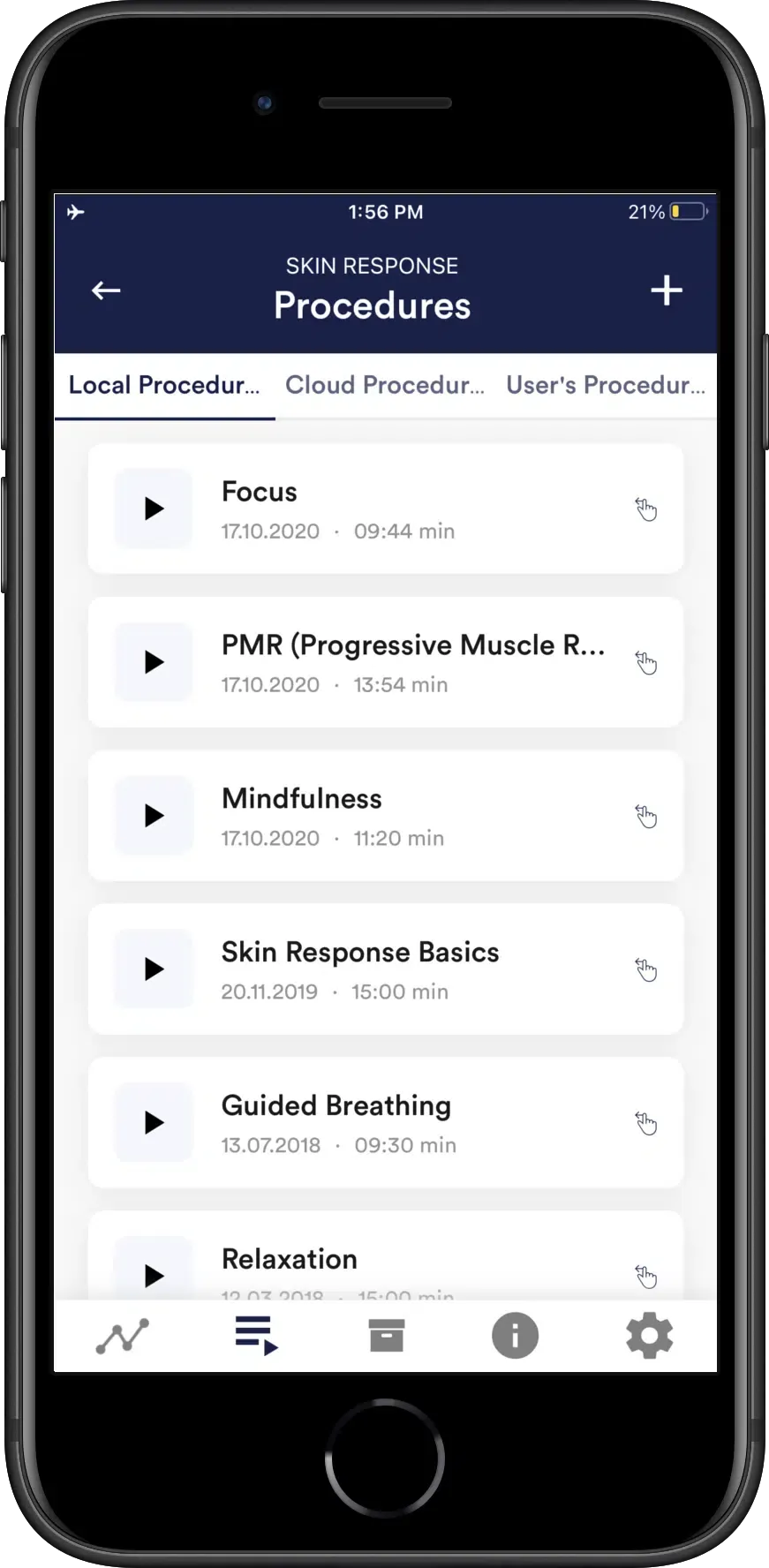
The free eSense App is available for Android smartphones and tablets on the Google Play Store, and for iPhone and iPad on the Apple App Store. The app offers comprehensive features for effective respiratory biofeedback training including the breathing aid, real-time visualization, curves export, and feedback via video, music, tones, and vibration. Optional premium features are available through in-app purchases.


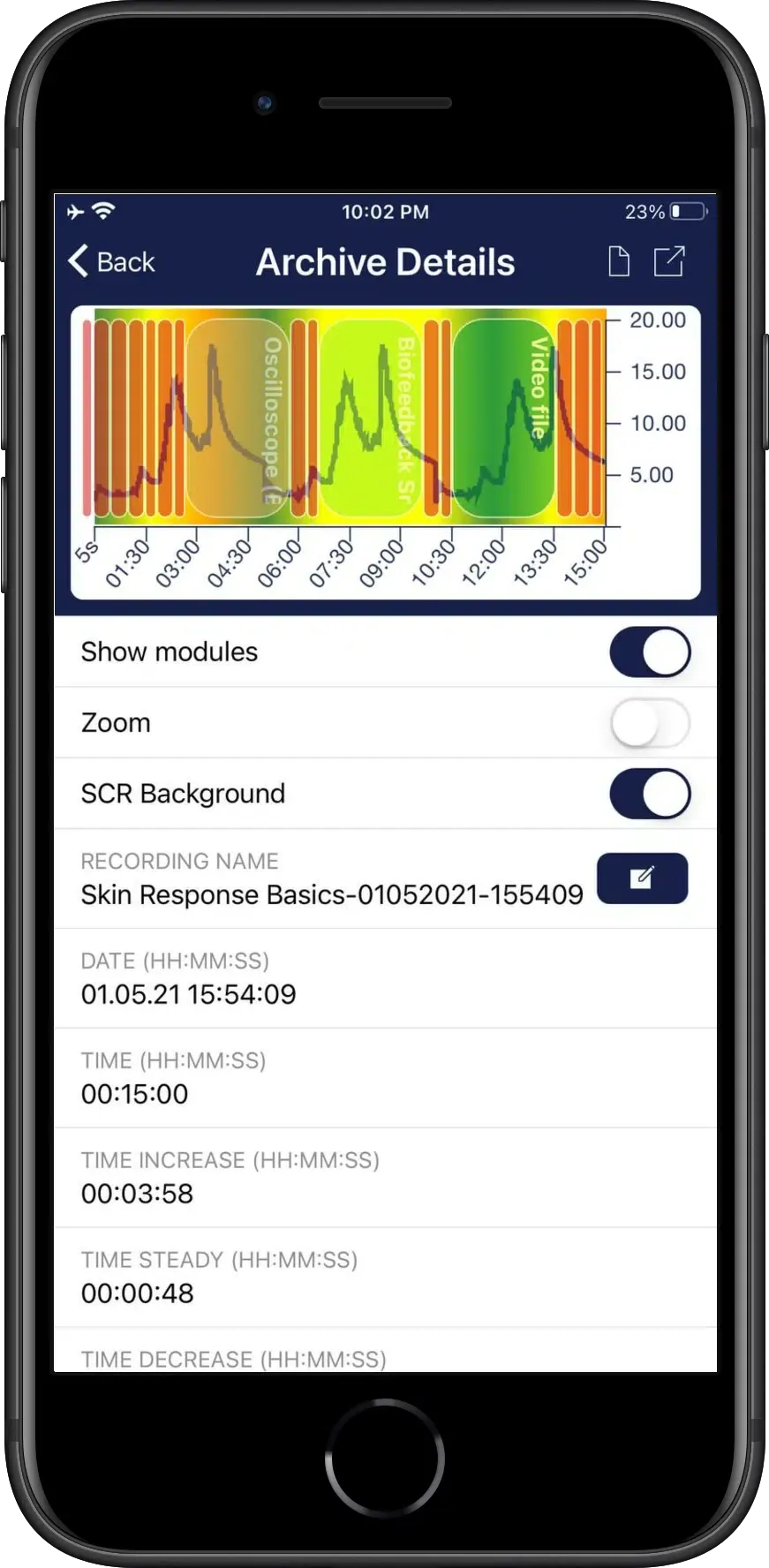
Most modern iOS devices need a 3.5mm audio adapter:
Available as optional add-on in our shop (+€10).
Most Android devices with USB-C need a USB-C to 3.5mm audio adapter.
Available as optional add-on in our shop (+€10).
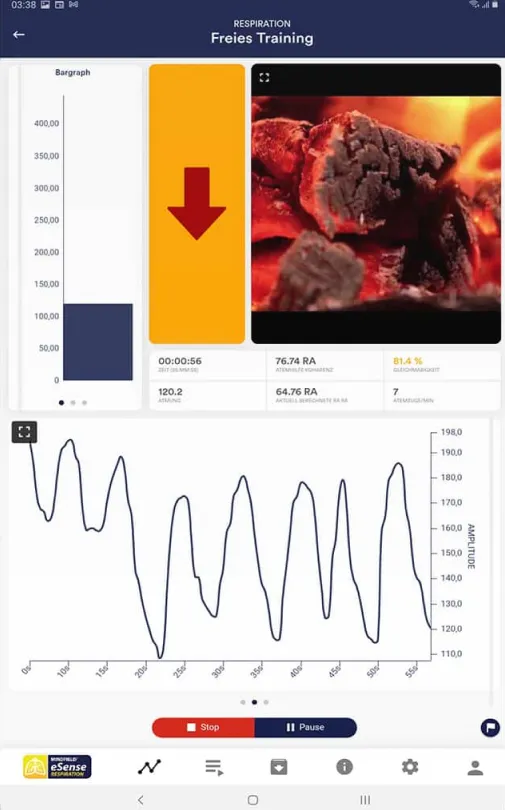
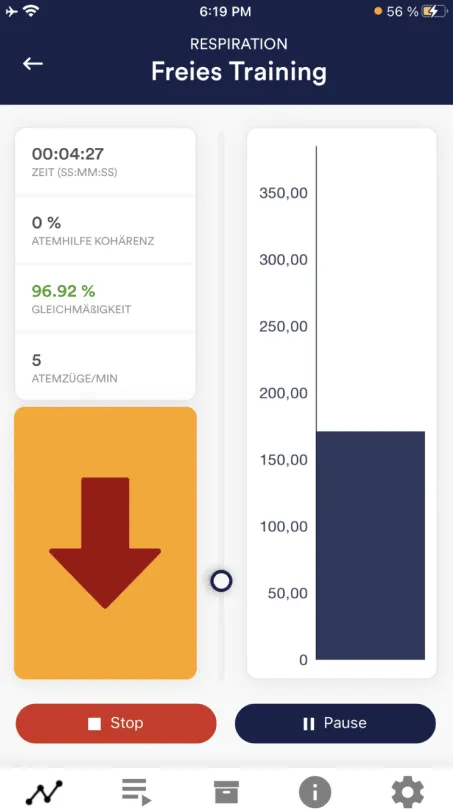
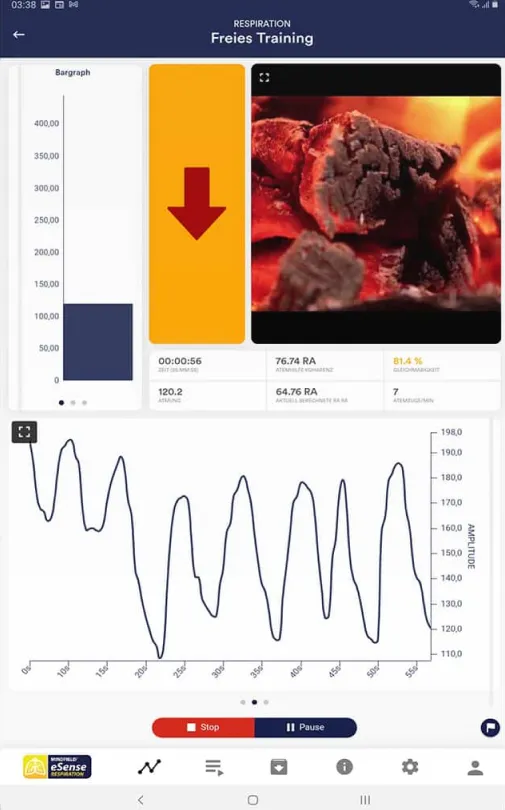
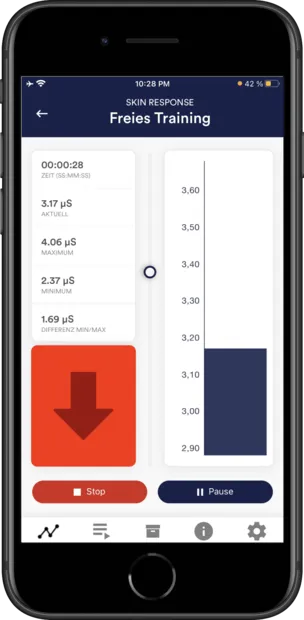
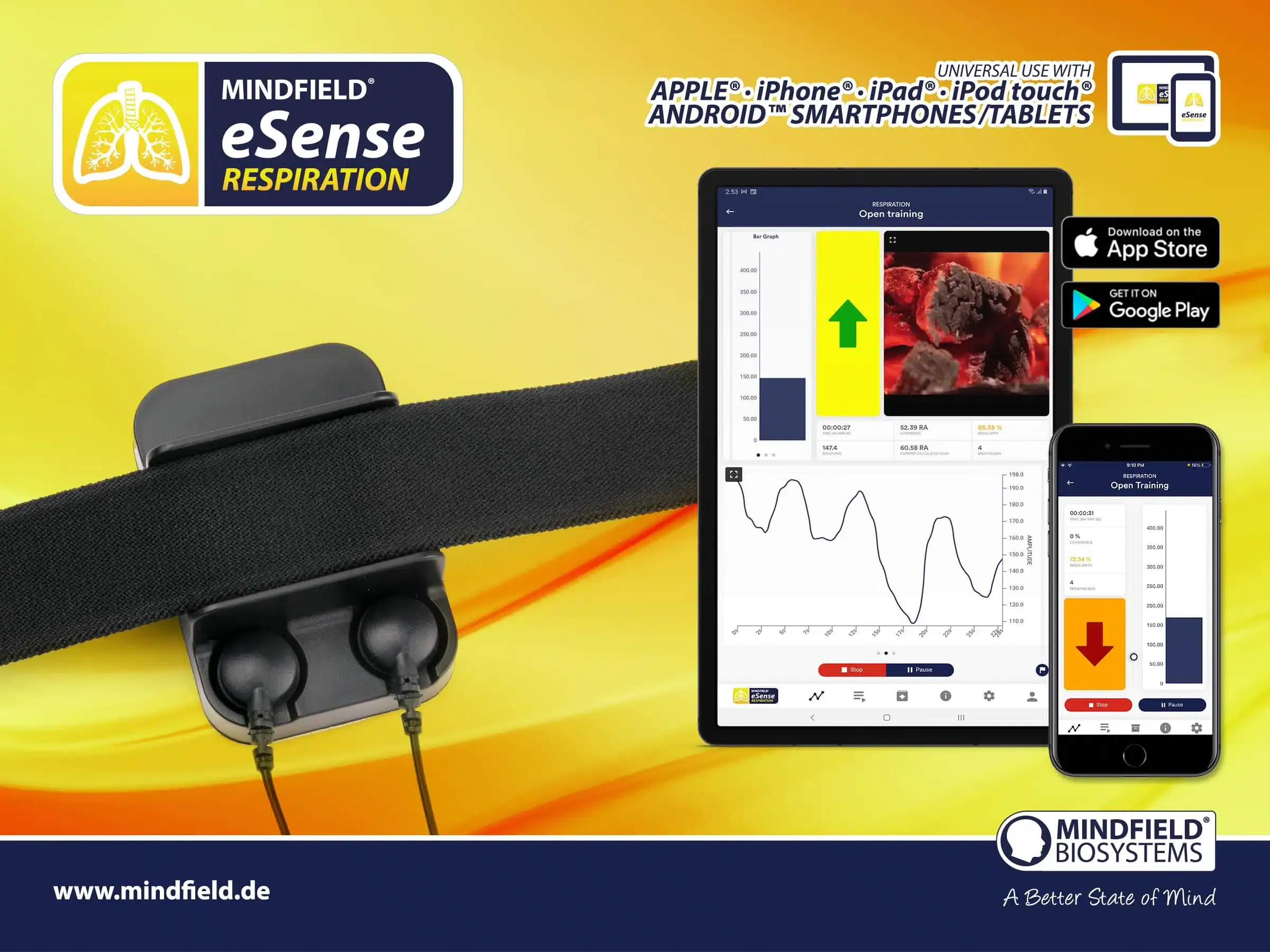
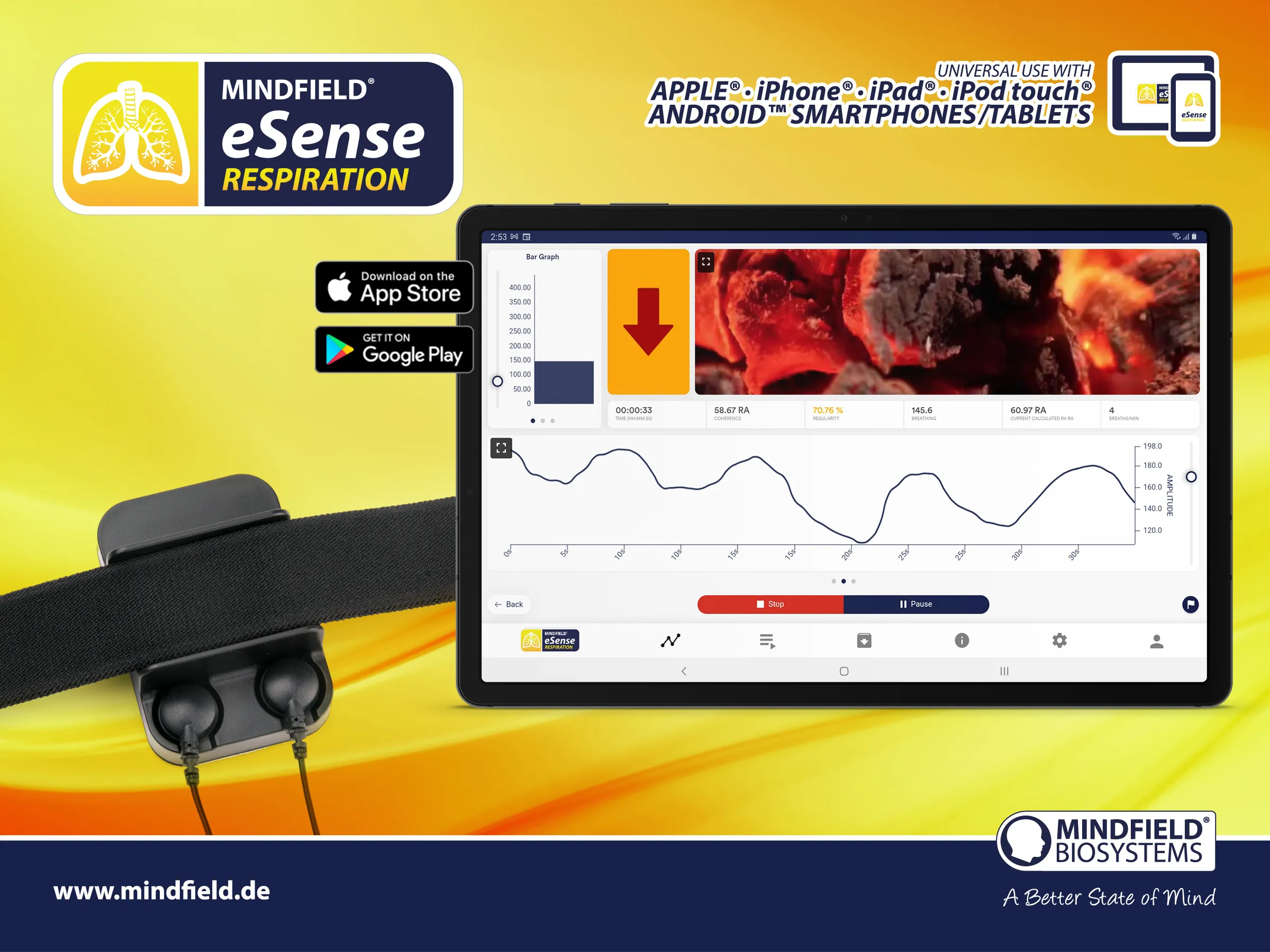
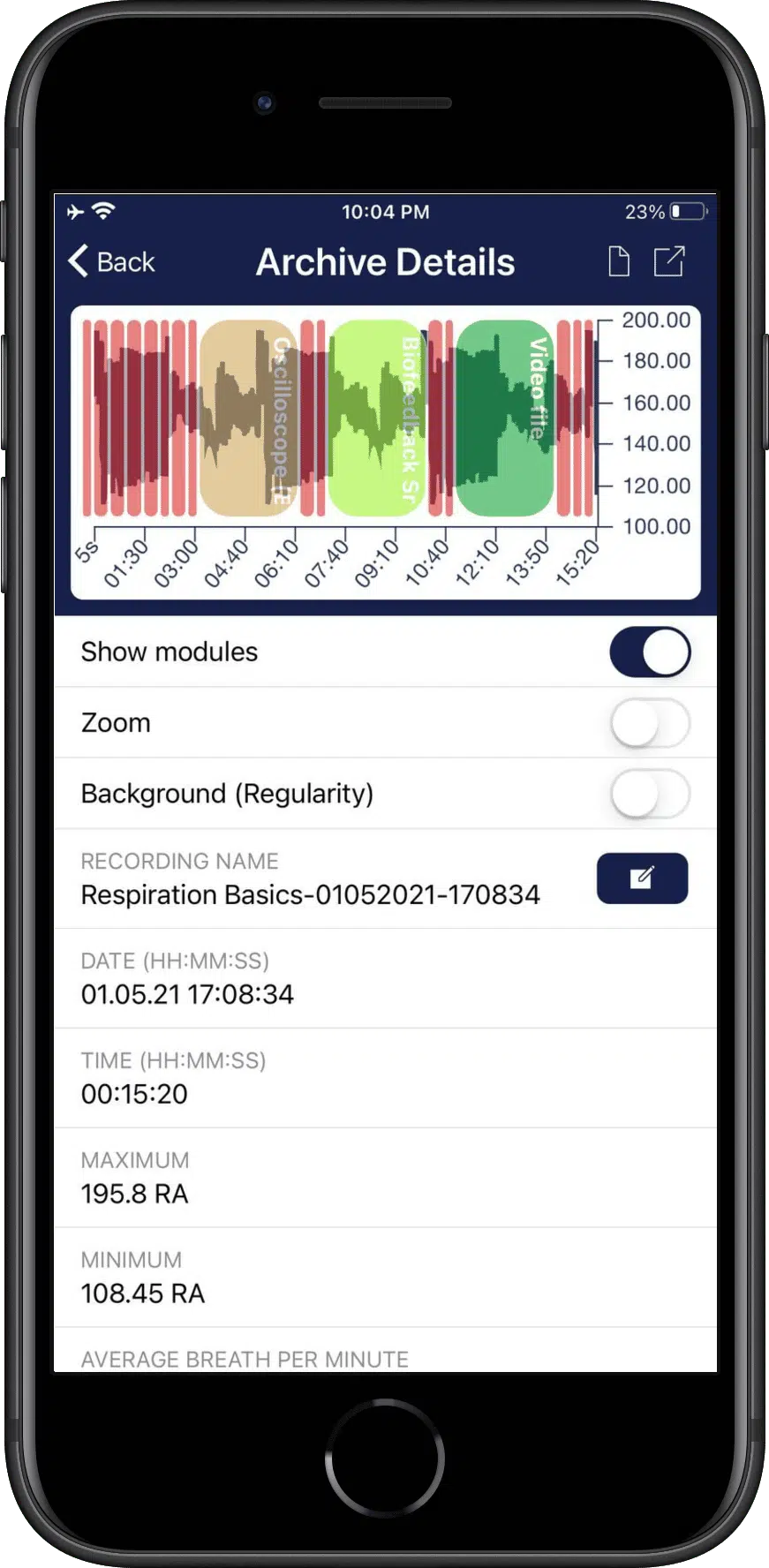
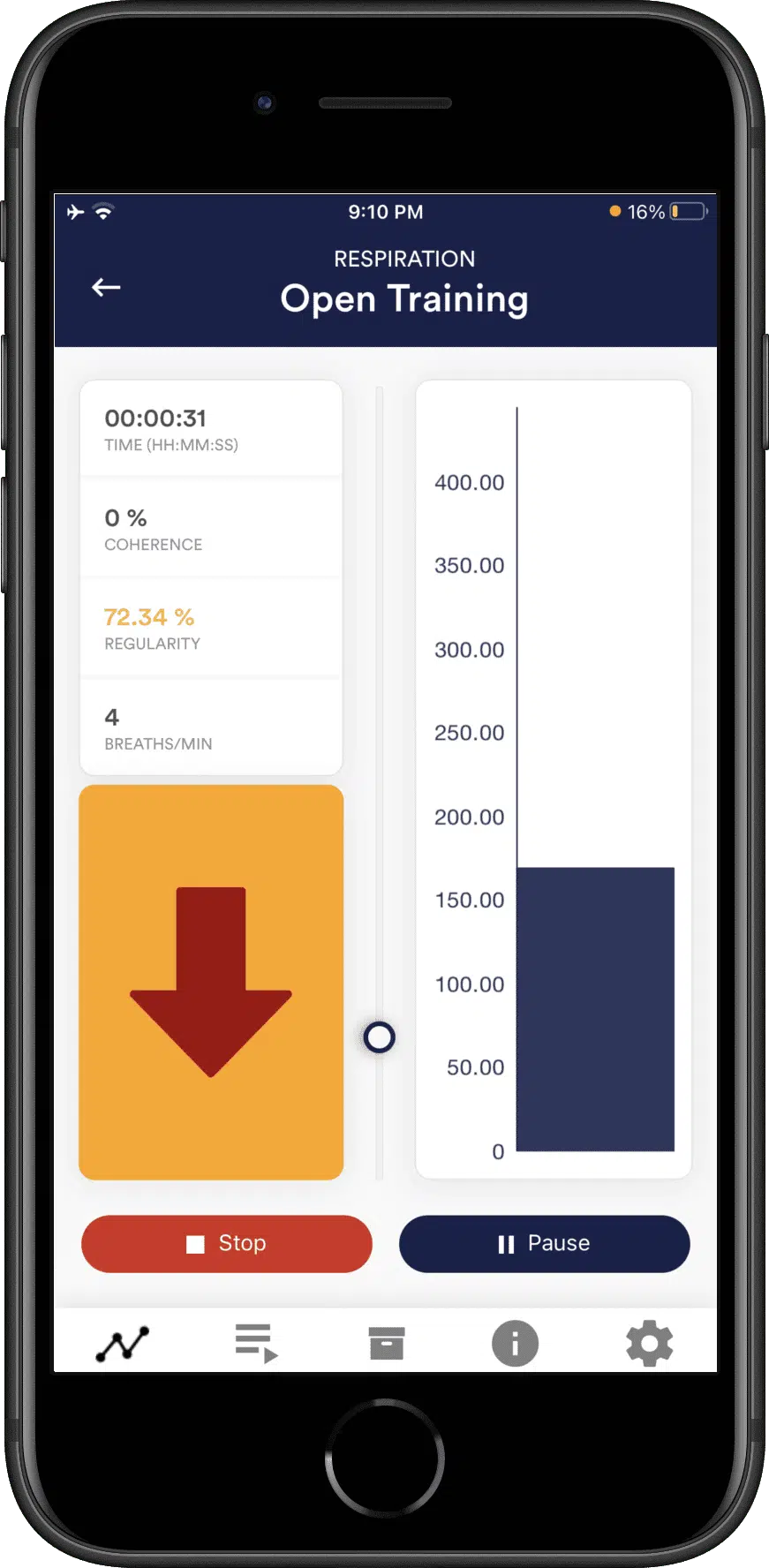
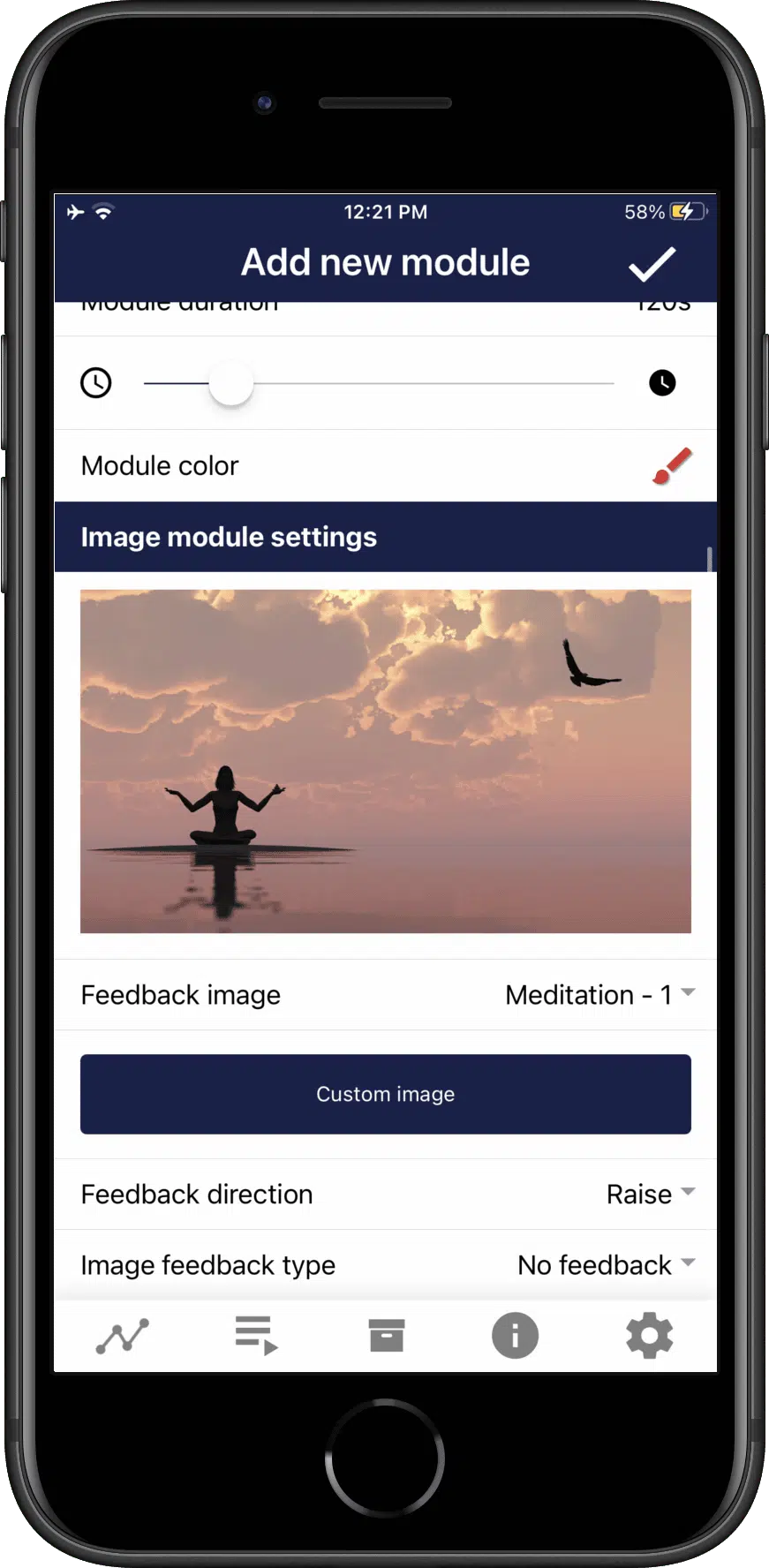
The free eSense App is available for Android smartphones and tablets on the Google Play Store, and for iPhone and iPad on the Apple App Store. Train your breathing with the built-in breathing aid, view real-time respiratory biofeedback, and export your data as CSV for detailed analysis. Optional premium features are available through in-app purchases.
Respiratory biofeedback is a breathing training technique that provides real-time feedback on your breathing patterns to develop slower, deeper breathing habits. By monitoring breathing rate, depth, and rhythm, you learn diaphragmatic breathing exercises that activate the parasympathetic nervous system and reduce stress. Respiratory biofeedback helps with hyperventilation, shallow breathing, anxiety management, and developing optimal breathing patterns around 6 breaths per minute for maximum relaxation and stress reduction.
Prefer to buy in your region? The eSense is also available from an authorized local partner:
Developers can build their own applications with this sensor — for research, commercial products, VR or gadgets.
Respiratory biofeedback uses a sensor to measure your breathing rate, depth, and rhythm in real time, so you can see your breathing pattern instead of only feeling it. The eSense Respiration is an elastic breathing belt worn around the abdomen; it detects each expansion and contraction and sends the signal to the free eSense App, which shows your breath as a live curve with visual and audio feedback. Watching this display helps you notice habits you might otherwise miss, such as shallow chest breathing or holding your breath under stress. From there you can practise techniques like diaphragmatic breathing, paced breathing, and coherence breathing, using the feedback to keep your rhythm smooth and even. Because breathing is one of the few autonomic functions you can consciously control, it is an ideal starting point for biofeedback. Over time, this practice can support deeper relaxation and greater awareness of how your breathing changes with stress.
Yes, the eSense Respiration is an add-on sensor and requires the eSense Skin Response to work, because the breathing belt connects to it directly through the 3.5mm audio jack. On its own the Respiration belt cannot transmit data to your phone; it relies on the Skin Response sensor as its connection point. If you do not already own an eSense Skin Response, the most convenient option is the complete bundle, which pairs the Skin Response with the Respiration set and includes everything needed to begin breathing biofeedback right away. This combination also has a practical benefit: you measure breathing and skin conductance together, so you can see how your breathing exercises influence your stress arousal in the same session. If you already own a Skin Response, you can simply add the Respiration belt as an accessory. The free eSense App recognizes the belt automatically once it is connected.
The free eSense App offers several guided breathing exercises with the eSense Respiration, including paced breathing where you inhale and exhale at set intervals, diaphragmatic (abdominal) breathing training, and coherence breathing at a slow rate of roughly five to six breaths per minute. Each exercise uses the live feedback from the belt so you can keep your breathing smooth, even, and at the target pace. There is also an Open Training mode, which lets you practise any technique you like while monitoring your breathing rate and relative depth in real time. If you add the eSense Pulse, you can train heart-breath coherence, synchronizing your breathing with your heart rhythm to encourage a calm, balanced state. Beginners often start with simple paced breathing before moving on to coherence work. Because the feedback shows exactly what your breathing is doing, it is easy to tell whether you are following the pace correctly.
The eSense Respiration uses a high-sensitivity stretch sensor built into an elastic belt, which accurately detects the expansion and contraction of your chest and abdomen as you breathe. From this it measures your breathing rate in breaths per minute and your relative breathing depth in real time, updating continuously as you inhale and exhale. The sensor is responsive enough to distinguish between shallow chest breathing and deeper diaphragmatic breathing, which is what makes it effective for training a slower, fuller breathing pattern. Because it measures relative movement rather than an absolute clinical volume, it is ideal for observing changes and trends within and across sessions rather than producing a laboratory spirometry reading. For the purpose of biofeedback, learning to control and improve your breathing pattern, this responsiveness is exactly what you need. Correct belt placement around the abdomen gives the cleanest and most consistent signal.
Research shows that controlled breathing techniques, especially slow-paced breathing at around six breaths per minute, can activate the parasympathetic nervous system and support relaxation. Breathing biofeedback makes these techniques more effective by giving you objective, real-time measurement of your breathing pattern, so you can tell whether you are truly slowing and deepening your breath rather than just intending to. With the eSense Respiration, the free eSense App shows your rhythm as a live curve, helping you stay on pace during the exercise. When you combine the belt with the eSense Skin Response, which measures arousal through skin conductance, you can directly observe how a calmer breathing pattern lowers your stress signal in the same session. This visible link between breathing and arousal is often what makes the practice click. As always, results vary between individuals, and biofeedback is intended to support relaxation rather than to treat any medical condition.
Most breathing biofeedback protocols recommend about 10 to 20 minutes of practice per day, and regularity tends to matter more than the length of any single session. Beginners can comfortably start with 5-minute sessions and extend them as slow, paced breathing starts to feel natural. Because breathing is a skill, short daily repetition usually produces steadier progress than an occasional long session, and even ten focused minutes most days can lead to noticeable improvements in breathing awareness and relaxation over roughly two to four weeks. The free eSense App records each session, so you can review your breathing rate and consistency over time and see how your pattern develops. It also helps to practise at a consistent time, such as in the morning or before sleep, so the habit sticks. If you ever feel light-headed while slowing your breath, return to your normal rhythm and shorten the session.
Find the ideal eSense sensor for your personal training goal.
Start Sensor FinderThe eSense Respiration provides respiratory biofeedback as an add-on sensor that connects to your eSense Skin Response. Together, they provide powerful combined breathing training and electrodermal activity feedback — helping you see exactly how your breathing exercises affect your stress response.
Why combine respiratory biofeedback with other sensors?
• Skin Response + Respiration (required): The breathing belt physically connects to Skin Response, giving you real-time respiratory biofeedback combined with stress level monitoring
• Add eSense Pulse for HRV coherence: The ultimate combination — synchronize your diaphragmatic breathing exercises with your heart rhythm for coherence training
• eSense Temperature: Add thermal biofeedback to see how breathing training affects peripheral blood flow
Important: eSense Respiration requires eSense Skin Response to function. If you don't have a Skin Response yet, we recommend the complete respiratory biofeedback bundle.
Learn about all sensor combinations: Combination possibilities → Or try our interactive Sensor Finder →
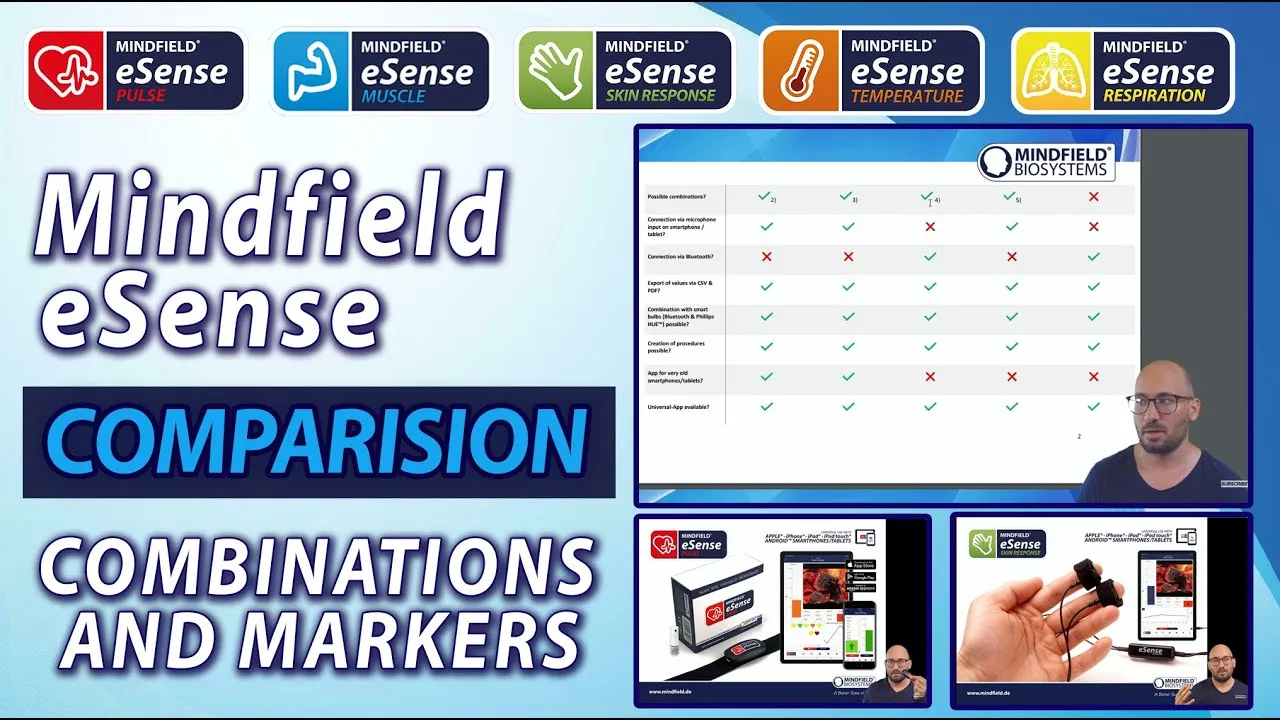
Visit our comprehensive helpdesk for setup guides, troubleshooting tips, video tutorials, and detailed documentation. Our support team is available via email to assist you with any questions about eSense Respiration.
Last updated: